



Bilingualism
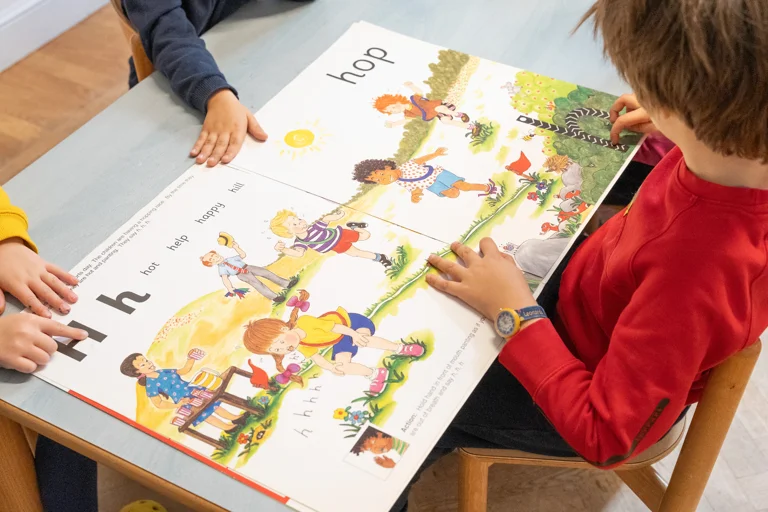
Natural, everyday bilingualism
In the early years, children are primarily exposed to a language through relationships and experience. That is why, at Giocomotiva , Italian and English are woven into daily life right from the Nursery – during care, play, story time, music and shared experiences.
Children do not study English as a separate subject: they encounter it and gradually use it to communicate, play, explore and learn about the world.
Bilingualism in practice
Educators, teachers and English teachers plan the day together and create an environment in which both languages are used in authentic and meaningful situations.
Reading a story together, singing a song, having lunch, playing in the garden, taking part in an activity in the art studio, or going out for a walk in the neighbourhood all provide opportunities to listen to, understand, and, gradually, use English.
Language thus develops alongside children’s experiences: first through listening, gestures and familiar routines, and then through words, expressions and increasingly rich forms of communication.
Bilingual schools and Full English schools
Most of our centres are bilingual (Italian and English). Some centres, in Milan and Florence, are Full English: English is the language of the day, within the same warm and welcoming environment that characterises all Giocomotiva schools.
In both models, the aim is the same: to enable children to encounter a second language in a natural, continuous and meaningful way through the relationships and experiences that characterise school life.
To find out what courses are on offer at your nearest school, visit the pages for the Milan, Florence and Rome branches.
Growing up speaking two languages
Growing up in a bilingual environment enables children to become familiar, from a very early age, with sounds, linguistic structures and different ways of communicating.
Daily exposure to two languages can also foster a greater awareness of linguistic and cultural differences and help children to feel at ease with the presence of different languages and perspectives.
Research and training
Our approach to bilingualism is also informed by research and continuous professional development.
Becoming Education collaborates with Bilingualism Matters, an international network that brings together scientific research and knowledge on bilingualism and multilingualism. Dialogue with researchers and experts contributes to the training of our professionals and to the development of educational practices in schools.
Domande frequenti
start your journey with us
Come and discover Giocomotiva: book a visit or request information. We look forward to seeing you!